

Prehistoric Marine Reptiles are fantastic, but are they fantasy? These are the top ten and they are massive and if you lived in prehistoric times they could be deadly. Megalodon (Otodus megalodon) was a colossal prehistoric shark that inhabited the oceans approximately 23 to 3.6 million years ago.
Size: Estimates suggest that Megalodon could reach lengths up to 20.3 meters (about 67 feet).
Diet: As an apex predator, Megalodon primarily preyed upon large marine animals, including whales, seals, and sea turtles. Its massive, serrated teeth—some measuring up to 18 cm (7 inches) in length—were well-adapted for seizing prey and breaking through bone.
Coloration: The exact coloration of Megalodon remains speculative due to the lack of preserved skin pigments in the fossil record. However, it’s plausible that, like many modern sharks, Megalodon exhibited counter-shading: a darker dorsal (upper) side and a lighter ventral (under) side. This coloration would have provided camouflage, making it less visible to prey from both above and below. Active Wild

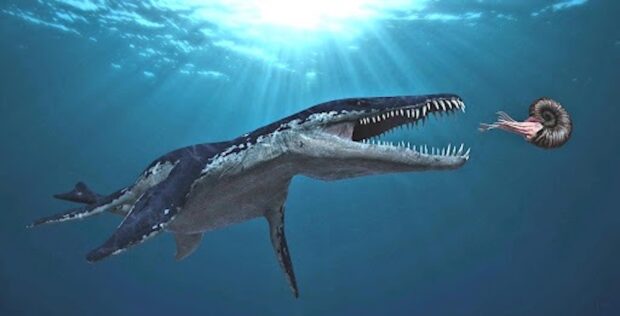
- Liopleurodon
- Size: Estimates suggest lengths up to 12 meters (39 feet).
- Diet: Carnivorous, preying on fish and other marine reptiles.
- Coloration: Exact coloration is unknown; likely had counter-shaded patterns (darker on top, lighter underneath) common in marine predators.
- Description: A large pliosaur with a robust body, powerful flippers, and a massive head equipped with sharp teeth, making it a formidable predator of the Jurassic seas.
- Image Source: Liopleurodon Extinct Marine Reptile
- Kronosaurus
- Size: Approximately 10–12 meters (33–39 feet) in length.
- Diet: Carnivorous, feeding on marine reptiles and cephalopods.
- Coloration: Coloration is speculative; may have had a counter-shaded pattern for camouflage.
- Description: A short-necked pliosaur with a large head and powerful jaws, known for its role as an apex predator in the Early Cretaceous seas.
- Image Source: Kronosaurus Extinct Marine Reptile

- Plesiosaurus
- Size: About 3.5 meters (11.5 feet) long.
- Diet: Primarily fish and cephalopods.
- Coloration: Unknown; possibly counter-shaded.
- Description: Characterized by a small head, long neck, broad turtle-like body, and four flippers, Plesiosaurus was well-adapted to marine life during the Early Jurassic period.
- Image Source: Facts and Figures About Plesiosaurus

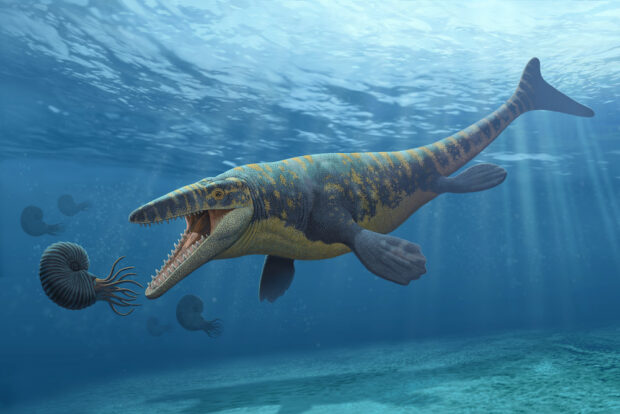
- Tylosaurus
- Size: Up to 14 meters (46 feet) in length.
- Diet: Carnivorous, consuming fish, sharks, smaller mosasaurs, and seabirds.
- Coloration: Exact coloration unknown; may have exhibited counter-shading.
- Description: A large mosasaur with an elongated body and tail, and a distinctive protruding snout, making it a dominant predator of the Late Cretaceous seas.
- Image Source: Tylosaurus Extinct Marine Reptile
- Ichthyosaurus
- Size: Approximately 2 meters (6.5 feet) long.
- Diet: Fish and cephalopods.
- Coloration: Fossil evidence suggests dark-colored skin, possibly counter-shaded.
- Description: Resembling modern dolphins, Ichthyosaurus had a streamlined body, long snout filled with conical teeth, and was an efficient swimmer in the Early Jurassic seas.
- Image Source: Extinct Marine Reptiles Known as Ichthyosaurs
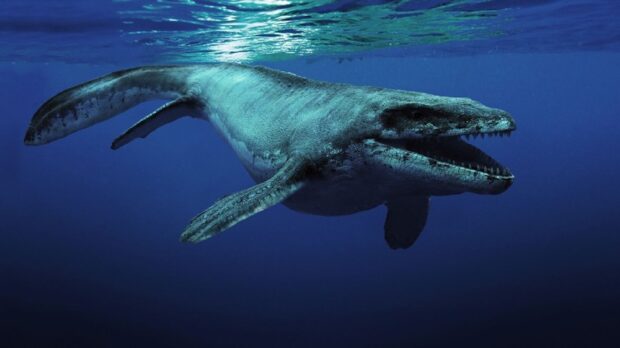
- Mosasaurus
- Size: Estimates range up to 17 meters (56 feet) in length.
- Diet: Apex predator; diet included fish, sharks, marine reptiles, and seabirds.
- Coloration: Exact coloration unknown; likely counter-shaded.
- Description: A massive mosasaur with a robust body, powerful tail, and paddle-like limbs, dominating the Late Cretaceous marine ecosystems.
- Image Source: Mosasaur Facts and Information
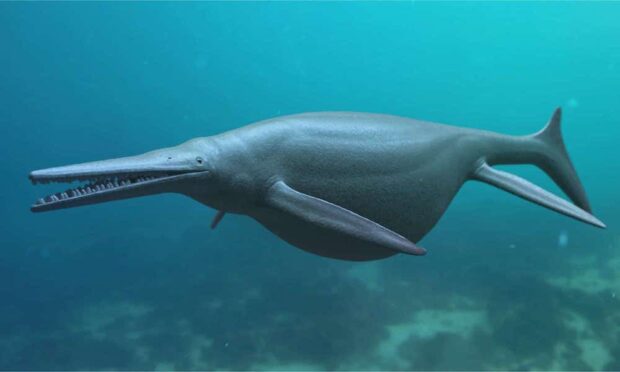
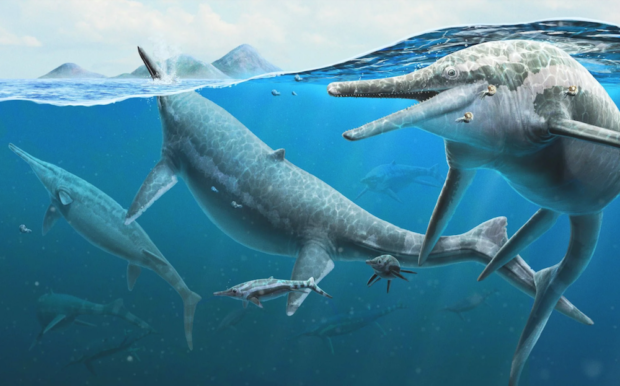
- Shonisaurus
- Size: Species like Shonisaurus sikanniensis reached lengths up to 21 meters (69 feet).
- Diet: Primarily cephalopods and fish.
- Coloration: Unknown; speculative counter-shading.
- Description: One of the largest ichthyosaurs, with an elongated, slender body and long snout, adapted for deep diving in the Late Triassic oceans.
- Image Source: Shonisaurus
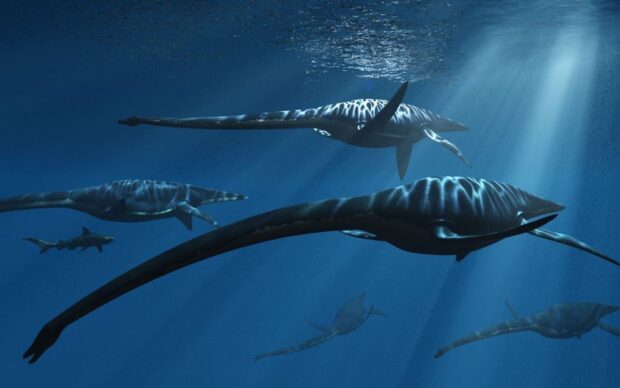
- Elasmosaurus
- Size: Up to 14 meters (46 feet) long, with its neck accounting for about half of its length.
- Diet: Fish and small marine organisms.
- Coloration: Unknown; possibly counter-shaded.
- Description: Notable for its extremely long neck and small head, Elasmosaurus used its neck to stealthily approach prey in the Late Cretaceous seas.
- Image Source: Prehistoric Sea Creatures
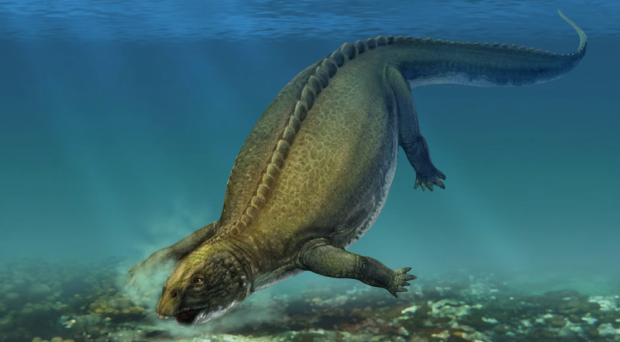
- Placodus
- Size: About 2 meters (6.5 feet) in length.
- Diet: Specialized in feeding on shellfish, using its broad, flat teeth to crush shells.
- Color: Exact coloration unknown; often depicted with a grayish, armored appearance.
- Description: Characterized by a stocky body
- Image Source: Placodus
- Thalassomedon
-
- Size: Around 12 meters (39 feet) in length.
- Diet: Carnivorous, feeding on fish and cephalopods.
- Color: Exact coloration unknown; typically depicted with dark tones.
- Description: A long-necked plesiosaur with a broad body and large flippers, adapted for cruising through ancient seas.
- Image Source:Thalassomedon

-

